- 30/06/2026
Place, Care and Knowledge Production: Reflections from the University of Cape Coast
Tariro Moyana
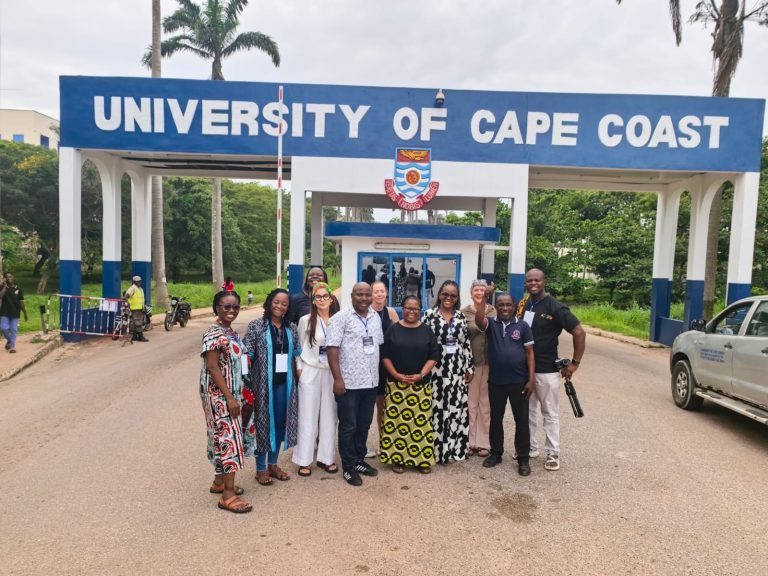
I was curious to experience the University of Cape Coast in Ghana, which hosted the Reimagining Care: Relationships, Responsibilities, and Care in Africa Conference on 26–27 May 2026, after participating in the Zimbabwean and Tanzanian conferences and fellow visits for the Reimagining Reproduction (ReRe) Project. When we arrived at the main entrance, one of the first features that drew my attention was the large blue sign bearing the words ‘University of Cape Coast’. What struck me was how the university felt both familiar and different. It was familiar because most of the scenes reflected experiences from my own university and other parts of the African higher education context. The students rushing for classes and the landscape of university libraries, hospitals, lecture rooms, and faculties characterised the typical academic life.
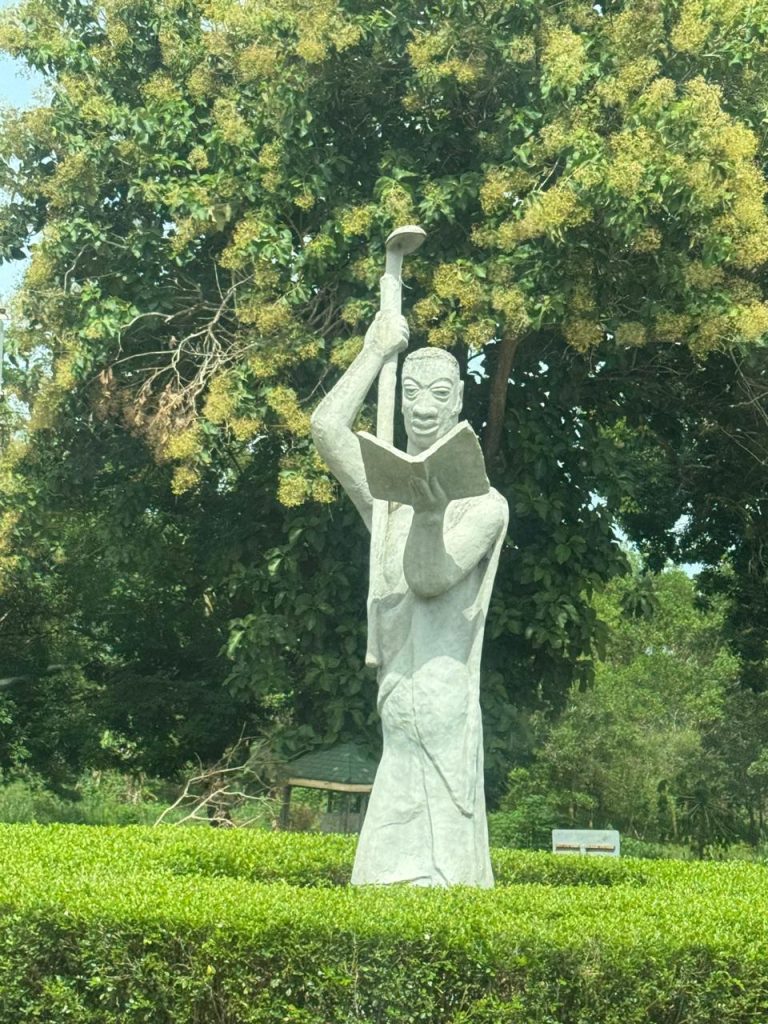
However, there was something different, something Ghanaian! The architecture and landscape, particularly the sculptures, carried a deeper meaning, reminding me that knowledge production is situated within lived realities and histories. Every morning, we would pass a sculpture of a human figure holding a light and looking into a book. It captured the everyday realities of scholarship, which often occurs alongside multiple responsibilities, aspirations, and constraints.
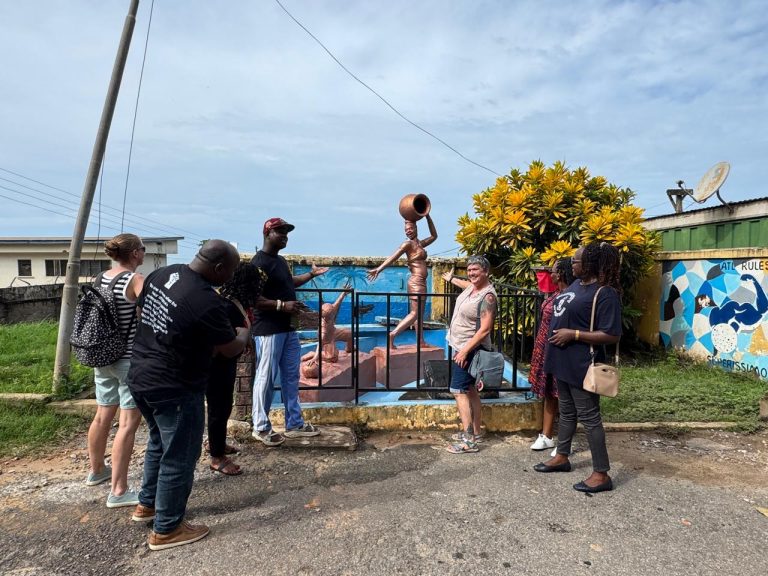
Another memorable moment at the university occurred one morning when our team encountered a sculpture depicting a woman carrying a vessel reaching out towards a child attempting to lift another vessel. Behind the sculpture was a sketch of the Atlantic Ocean, which evoked reflections on Cape Coast’s historical significance. The ocean served as a reminder of the histories of displacement and resilience that continue to shape the place. Standing before it, I found myself reflecting on the themes that had brought us together for the conference. The sculpture embodied a relationship of care and possibility. The woman appeared not merely to support the child but to guide and nurture, creating the conditions through which learning and growth might occur. As the conference explored questions of reproduction, care, and relationships, the sculpture took on a deeper significance. It reminded me that reproduction is not only about the biological continuation of life but also about the social processes through which knowledge, opportunities, and futures are cultivated across generations. Leaving the University of Cape Coast, I carried with me more than new academic insights. I left with a renewed appreciation of how place shapes scholarly experience and how histories continue to inform the questions we ask about care, social life, and knowledge production.